How to get the most out of Sweden's digitalisation grant
By Mohammed AlsaadiLäs på svenska
You know that you qualify and what the money can pay for. What separates a strong application from a weak one rarely comes down to the project itself. It comes down to timing, which category you apply under, and how the paperwork is structured.
Timing: prepare everything that doesn't cost money
You can't start the eligible work before the decision arrives, but that doesn't stop you preparing. Write the requirements spec. Collect quotes. Negotiate the contract with your supplier, just don't sign it until the decision is in. Anything that doesn't involve an actual cost can run in parallel with the review, so the project starts the day the decision lands instead of weeks later.
The right category, not just the right project
Several regions, Jönköping is a clear example, run multiple parallel grants at once: digitalisation, sustainability, internationalisation, product and service development, and a separate one for startups. A project that structures knowledge and automates processes usually fits best under digitalisation, but if the same project also makes operations more resource-efficient, it can be worth testing against the sustainability grant instead, depending on how the region defines it.
The wrong category is a common rejection reason that has nothing to do with the project's quality. Read every category your region offers before deciding which one to apply under, not just the most obvious one.
Know your headroom under the ceiling
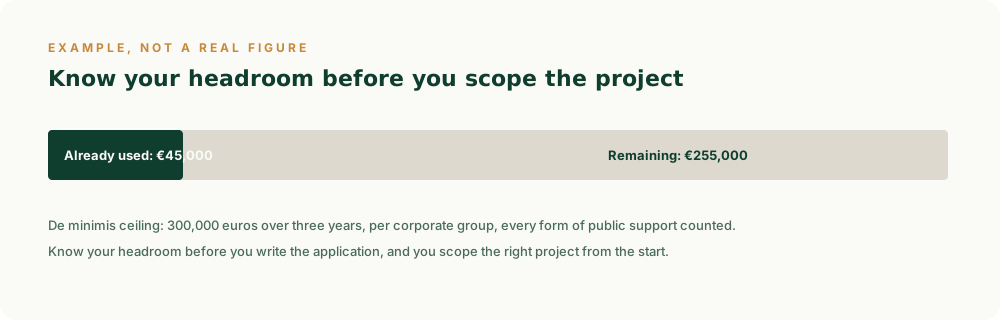
Every form of public support a company receives counts toward the same ceiling: 300,000 euros over a rolling three-year period, per corporate group. If you've already received other support, pandemic-era aid, a Vinnova grant, an earlier check, that reduces what you can apply for now.
That isn't only a constraint, it's a reason to scope the project correctly from the start. A company with plenty of headroom left can reasonably apply for a bigger, more ambitious project than the minimum. A company close to the ceiling should scale down and save the headroom for its next application, rather than spending it on a project barely worth the paperwork.
Build the invoice documentation before you start, not after
Every invoice for a purchased service has to show when the work happened, who did it, hours logged, hourly rate, and what it consisted of. Ask your supplier to structure the contract so invoices carry that information from day one, instead of trying to reconstruct it at final reporting. Purchases over 100,000 SEK also need a written agreement, an email is enough, but it has to exist.
Records can be audited for up to ten years after the final decision. Documentation structured correctly from day one saves you that review later.
Check the supplier against the related-party rule
A supplier who's related to the applicant, a spouse, partner, sibling, or child of an owner, or a company where any of them hold an ownership stake, disqualifies the cost even at a market rate. If that's discovered after payout, the entire grant can be reclaimed, not just that line item. Check it before you sign the contract, not after.
Before you submit
A strong application is specific about what new competence gets added, has cost documentation already structured correctly, and applies under the right category for the right region.
A strong application starts with the right partner.
We build the eligible work itself and set up the invoice documentation correctly from day one.
Book a callJoin the newsletter.
A weekly summary of new insights, plus what's new at Opmore. No spam, just insights.