Most onboarding advice ends the same way: build a binder. An introduction folder, an employee handbook, a PDF checklist. The advice is old, and it rarely explains why the binder stops working after a couple of months.
It isn't about the format. A binder in a plastic sleeve, a PDF on a shared drive, and a wiki page have the exact same flaw.
Four ways it goes wrong
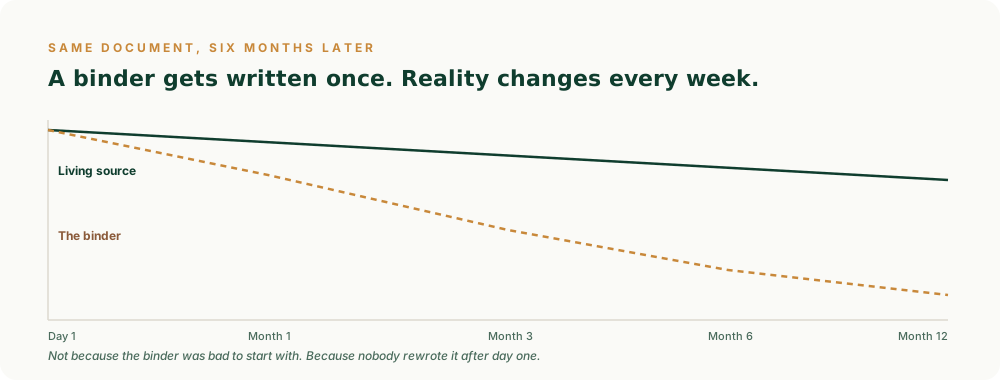
It gets written once. Someone sat down one afternoon and wrote down how things worked at that moment. Six months later the process has changed three times, but the document stays exactly as it was, because rewriting it never became anyone's job.
It gets read once. Day one, by a new hire too nervous to retain any of it. Then never again, because there's no reason to open it when the actual question comes up three weeks later.
It only covers the happy path. A binder can describe the standard route. It can't hold the exceptions and the judgment, why you do it this way in this specific case even though the process says otherwise. That knowledge never lived in the binder. It lived in the head of whoever wrote it, and stayed there.
It's only one of several places. Some of it sits in the binder. Some in a pinned Slack message. Some with whoever already left. A new hire asking "where does this live" gets a different answer depending on who they ask.
Three signs you still have a binder
Even a digital one. The document references someone who's since changed roles. A new hire still has to ask a colleague to understand what the document actually means. Nobody's opened it in months, because there's no reason to until someone new starts.
A wiki doesn't fix any of this on its own. It's still something written once and then forgotten, just in a browser instead of a binder.
What actually holds up
The difference isn't format, it's whether the source updates as part of how the work already happens, or as a separate project someone has to remember to do. The same structure that makes an AI agent useful is what lets a new hire ask instead of digging through a document that stopped being accurate three months ago.
You don't need more PDFs. You need a source that keeps up.
Want to see your onboarding without the binder?
We'll show you how a living source would work for your company. Book a demo.
Book a demoJoin the newsletter.
A weekly summary of new insights, plus what's new at Opmore. No spam, just insights.