Which knowledge should you capture first?
By Mohammed AlsaadiLäs på svenska
You've mapped where the knowledge lives. The next question is what order to capture it in, and most people answer it wrong.
The usual instinct is to start with the most common questions, an FAQ list built from what gets asked most. It feels logical. It's the wrong starting point, because the most common questions are usually already easy to answer. They get asked often precisely because the answer is close at hand. The dangerous part is what never gets asked, because nobody knows they should ask it.
The right question is risk times cost, not frequency
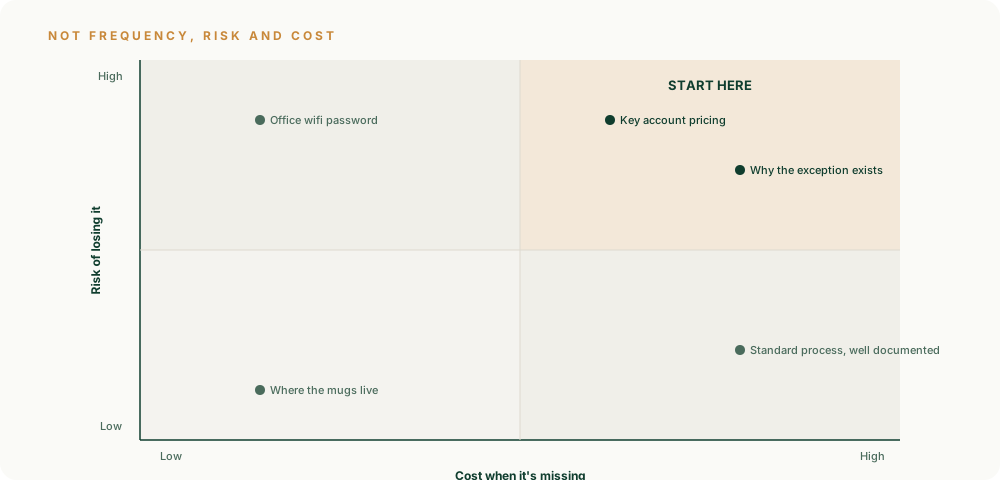
Two axes decide what to capture first. Risk: how likely is the knowledge to disappear within the next year, because the person who has it leaves, changes roles, or is simply too busy for anyone else to ever get access to it. Cost: what actually happens when the knowledge is missing at the moment it's needed, a blocked decision, a repeated mistake, a lost customer.
Prioritize the intersection: high risk and high cost at the same time. Everything else can wait.
What signals high risk
One person owns the knowledge, with no backup. That person is already overloaded, which often correlates with being on the way out or burning out. Nobody else in the organization would notice the knowledge was gone until the moment it was actually needed, because it's never asked for in advance.
What signals high cost
It blocks a decision that has to be made quickly. It touches a customer directly, pricing, contract terms, a sensitive relationship. It's tied to compliance or a regulation where a mistake is expensive to fix after the fact.
What it looks like in practice
Four kinds of knowledge, the same question applied to each. A pricing exception for a key account that only the sales lead knows about: high risk, high cost, start here. Why a specific contract looks the way it does: high risk if whoever negotiated it leaves, high cost if it's misunderstood at renewal. The office wifi password: low risk, low cost, doesn't matter when it gets captured. A well-documented standard process: low risk since several people already know it, can wait regardless of how often it's used.
Notice that frequency isn't one of the axes. The pricing exception might only come up once a quarter. That doesn't make it less urgent.
Start with the list, not the gut feeling
Write down every "only X knows this" fact you're aware of. Place each one on the matrix. Start in the top right corner, and work your way down. The method for actually capturing that knowledge is covered in full in step three, but the order you work in decides whether the project actually protects you against what hurts the most.
Want help prioritizing correctly?
We'll walk through your company and point out where to start. Book a free call.
Book a demoJoin the newsletter.
A weekly summary of new insights, plus what's new at Opmore. No spam, just insights.