How to digitalise your onboarding process, step by step
By Mohammed AlsaadiLäs på svenska
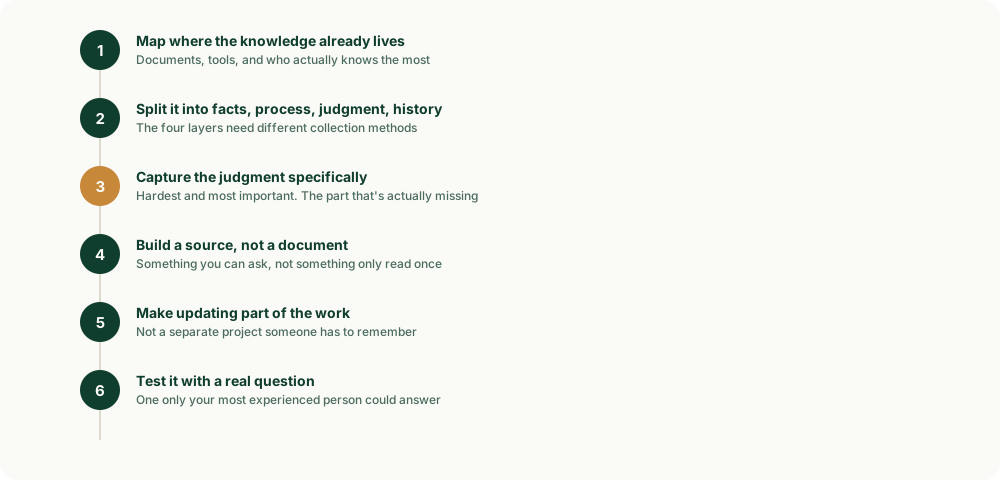
This is the full method, not a summary. Six steps, from finding where the knowledge sits to having a source that actually stays current. You can do this yourself. It takes time, and step three is harder than it sounds.
This also happens to be exactly the kind of project the regions call eligible digitalisation: digitalising business processes by structuring existing knowledge.
1. Map where the knowledge already lives
List the documents that already exist, individually, regardless of how outdated they are. List the tools: CRM, project management, shared folders. Then list the people, not their titles but what each one actually knows the most about. That list is usually shorter and more concentrated in a few people than you'd expect.
2. Split it into facts, process, judgment, and history
The four layers need different collection methods. Facts come out of systems, often automatically. Process can be documented by observing how the work actually gets done, not how it's supposed to. Judgment and history need a different approach, see step three.
3. Capture the judgment specifically
This is the step most people skip, because it's the hardest. Sit with whoever knows the most and ask specifically: when do you make exceptions to the process, and why. Which customer gets handled differently, and what would happen if you treated them like everyone else. What's already been tried and dropped, and why.
A useful trick: shadow someone for a full day and write down every time they do something that deviates from "the obvious way." Those deviations are exactly the judgment, and they never write themselves down.
4. Build a source, not a document
The difference is structural, not cosmetic. A document gets read once and goes wrong. A source can be asked, and can stay accurate over time because it's structured to be updated in pieces, not rewritten wholesale.
5. Make updating part of the work
Decide who owns which part before you finish, not afterward. Tie updating to a real event: when a process changes, the source updates that same week, not "when someone has time." Without that link you're back at step one in six months.
6. Test it with a real question
Give a new hire, or an AI agent, a question only your most experienced person could answer correctly. Not a fact question, a judgment question: why would you do it this way in this specific case. If the source handles it, it works. If it doesn't, you know exactly which layer is missing.
Want help doing this at your company?
We'll walk through your process and build the source together with you. Book a free call.
Book a demoJoin the newsletter.
A weekly summary of new insights, plus what's new at Opmore. No spam, just insights.