New-hire introduction plan: a template to start from
By Mohammed AlsaadiLäs på svenska
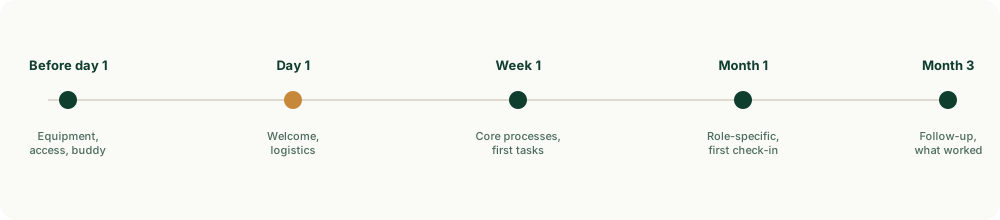
Copy the list below, paste it into a document, and fill in what's missing for your own company. Five phases, from before the person starts to three months in.
One thing before you start filling it in: a template like this has the exact same weakness as any other binder. It only covers the standard path, it doesn't stay current on its own, and it captures none of the judgment that actually makes your company different. Use it as a starting point, not a destination. More on that at the bottom.
Before day 1
- Laptop, phone, and other equipment ordered and configured
- Access to email, calendar, and the systems the role requires
- Email address and logins ready, tested in advance
- Buddy or mentor assigned, briefed on their responsibility
- First-week schedule sent to the new hire
- Team informed about who's starting and when
- Welcome email sent, with practical information about day one
Day 1
- Personal greeting on arrival, not just a schedule in an inbox
- Tour, physical or digital depending on the workplace
- Walkthrough of the company's what and why, not just what the role does
- Introduction to the immediate team, with time set aside for questions
- Practical: passwords, tools, where things live
- Lunch or coffee booked with at least one colleague
- Clear on who the new hire can ask when the buddy isn't available
Week 1
- Walkthrough of the three to five processes the role uses most
- First concrete task, small enough to finish that same week
- Introduction to how decisions actually get made day to day, not just the org chart
- Time set aside for questions that came up after the first day's impressions
- Short check-in with the manager: how does it feel so far
Month 1
- Role-specific depth in the areas unique to the position
- First real check-in: what's worked, what's been unclear
- Walkthrough of common exceptions to the standard process, and why they exist
- Confirm the new hire knows where to find the answer when something's unclear
- Feedback in both directions, not just upward
Month 3
- Follow-up: is the person self-sufficient on their core work
- Review of what in the onboarding helped and what didn't
- Update the plan with what you learned, before the next person starts
- Decide whether the buddy relationship continues or winds down
What a template can't do
This list covers what can be listed in advance. It doesn't cover why you make an exception for a particular customer, which decisions actually get made by whom regardless of title, or what's already been tried and abandoned. That knowledge doesn't live in a template, it lives in the company's four layers of knowledge, and the only thing that keeps it current is a structure that's part of how the work already happens.
Use the list above as a start. Build a living source for the rest.
Want to go further than the template?
We build the living source the template can't be. Book a free call.
Book a demoJoin the newsletter.
A weekly summary of new insights, plus what's new at Opmore. No spam, just insights.