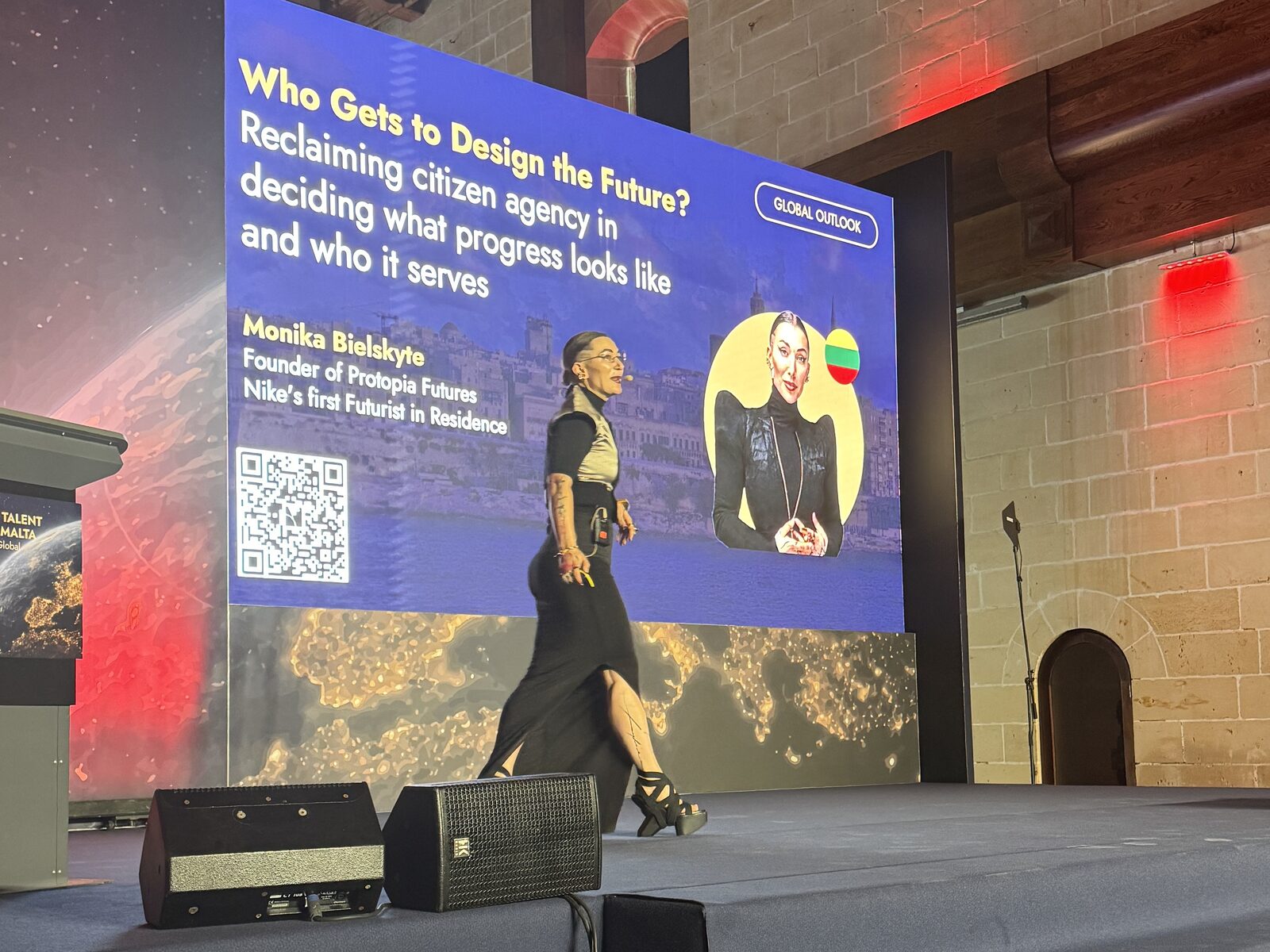
On 16 and 17 September the Future Talent Council and Malta's National Skills Council ran the Future Talent Forum in Valletta, in the Mediterranean Conference Centre. The building used to be the hospital of the Knights of St John, and you feel it: a long hall under a wooden ceiling, and 250 people underneath it talking about skills, AI and the future of work.
I'll be honest about one thing first. I did not know how much Malta matters. It sits in the middle of the Mediterranean trade routes and has for a few thousand years, and the country is now running the same play with skills: the OECD has been working with Malta's ministries on a national skills strategy out to 2035, and a good part of the programme was Maltese leaders saying out loud where it is working and where it isn't.
Each session I recorded has its own page with the full notes. Here is the short version.
The talks
Mark Patterson: the word is sovereignty. Toronto Metropolitan University's Magnet lead opened the forum with one question: as AI gets more capable, who becomes more capable with it? His line that stuck: the decisions we make in the next two years will shape the next five decades.
El Iza Mohamedou, OECD: skills systems that catch up. Malta's maritime sector had about 4,400 job postings in a year against 2,100 training enrollments. And 84% of the companies already train their people, while 71% still report skills gaps. Training that exists is not the same as training that is aimed.
Luke McKeever and Adrian Furnham: beyond units of productivity. North of six trillion dollars is going into AI infrastructure by 2030, and McKeever was blunt about where it needs its return: human efficiency. Furnham's answer was connection. Without it, people stop questioning what the tool hands them.
Monika Bielskyte: who gets to design the future. AI is an amplifier, not a change maker. It carries the culture that built it, and it gives back what you put in.
CHRO Voices. People chiefs from Hilton, aviation maintenance and C40 Cities. One company now runs interview case studies with no laptops, because instant AI answers were giving junior mechanics false confidence. And development goes wide now, not only up.
From Policy to Practice. Malta's sovereign wealth fund backs the person behind the pitch, because plans change. The OECD's point: consultation is not partnership. And employers told the University of Tennessee they did not want more technical depth from graduates. They wanted people who can communicate.
Where Partnership Becomes Progress. Agree on the problem before you sign anything. And Gretchen Neisler's test for a real partnership: if she disappeared tomorrow, would the work keep going?
Elena Magrini, Lightcast: prepare, don't predict. Only three in ten graduates land a job that matches their degree by title. Measured by skills overlap, it is five in ten. And less than 10% of AI's impact on the labour market shows up as new "AI jobs". The rest sits inside the jobs people already have.
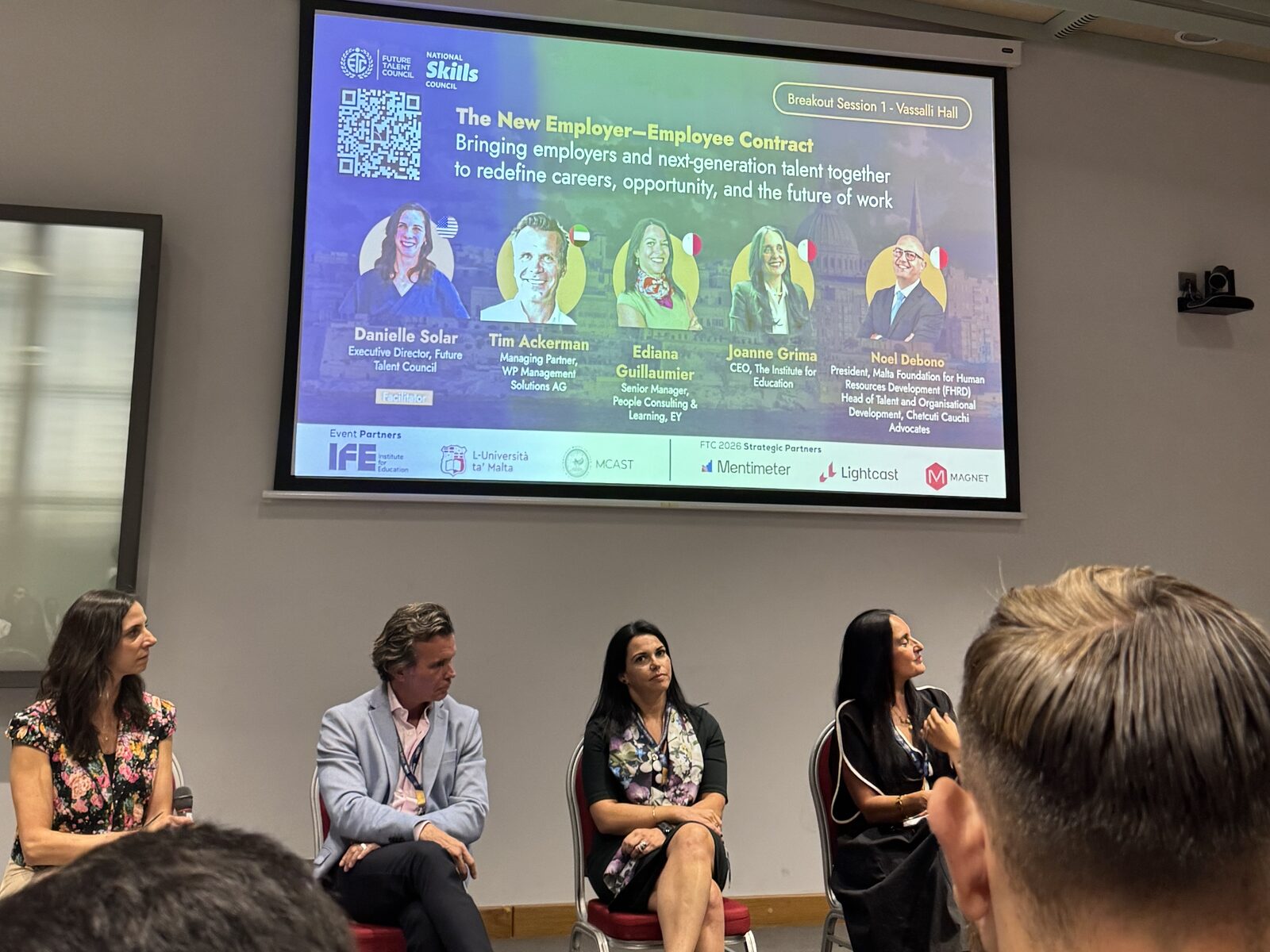
The thread through all of it
Nobody on that stage argued AI will replace people wholesale. What they argued, from every angle, is more specific: the skills that go up in value are the ones that are hardest to hand to a tool. Judgment. Knowing when the answer is wrong. Connection with the people around you. BCG's data on McKeever's slide said the same thing from the other direction: the skills a company needs most are the ones most at risk of being handed over.
That lands close to home for me. Those are exactly the things a new person does not get from a login and a shared drive. They get them from the people who already do the job, and in most companies that knowledge lives in a few heads. It is why Opmore extracts how a role is really done into a playbook a new person can ask from their first day, and routes what it can't answer to the right person. Magrini's point about the other 90% sat right on top of that. Most of what AI changes happens inside existing jobs, and somebody has to write down what the job now is.
If you only read one of these, read Luke McKeever and Adrian Furnham. If you work with graduates or interns, read Elena Magrini.
Thanks to the Future Talent Council and the National Skills Council for having me, and to Malta for being far more than I expected.
Talk to us about your project.
Book a callJoin the newsletter.
A weekly summary of new insights, plus what's new at Opmore. No spam, just insights.